Day trip to Pune from Mumbai
150 km inland to Maharashtra's second business capital: 3-hour trains, a Peshwa palace, the house where Gandhi was interned, and the best bun maska in the state.
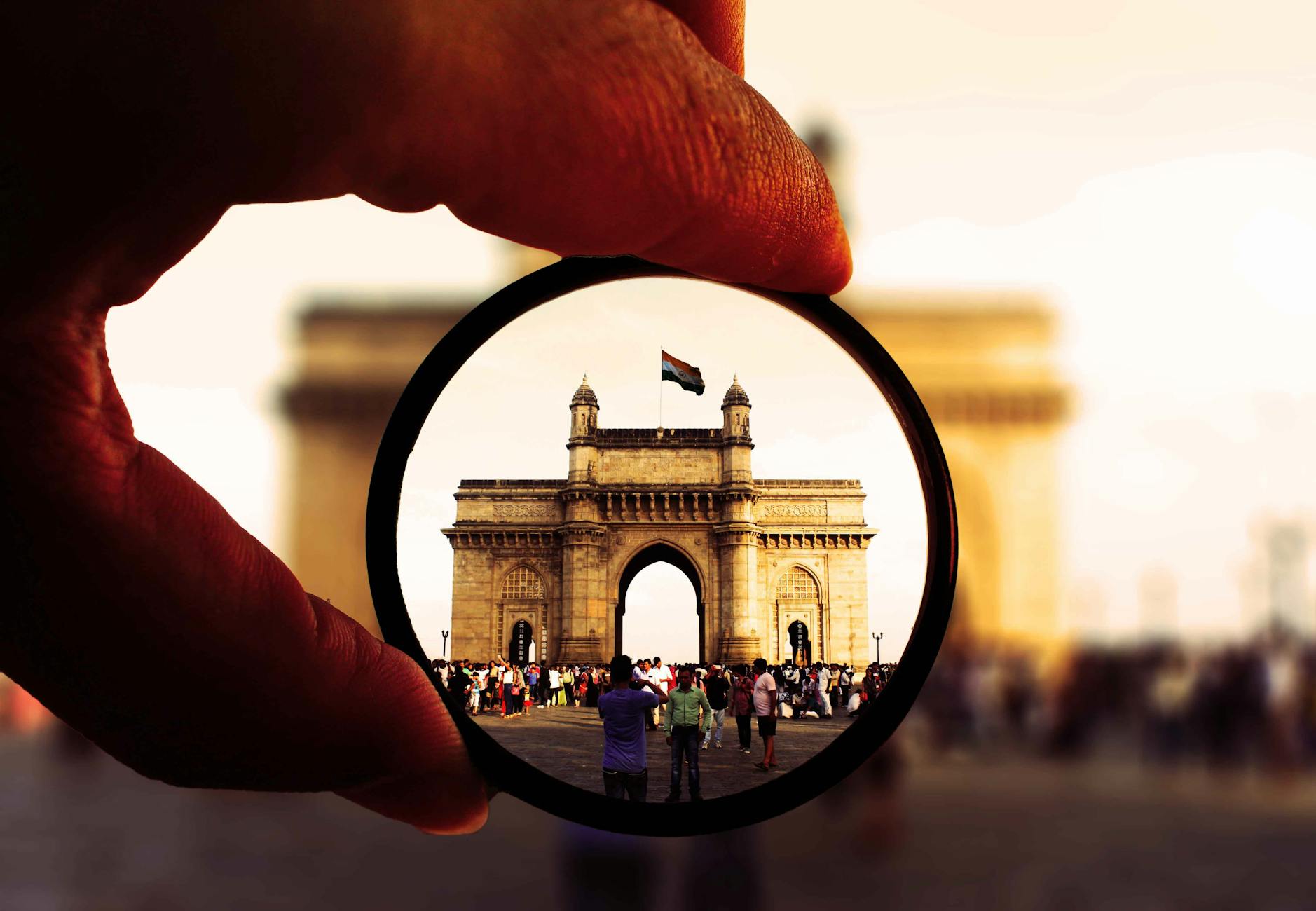 Stone gateway of Shaniwar Wada in central Pune
Why Pune, and what a single day buys you
Pune sits on the Deccan plateau at about 560 metres, 150 km southeast of Mumbai on the far side of the Bhor Ghat. It is the state's second-largest city, the historic seat of the Peshwas, the country's most concentrated cluster of engineering and management colleges, and the automotive and IT counterweight to Mumbai's finance economy. For business travellers it is a genuine second node: Hinjewadi's IT parks, the Chakan and Talegaon auto belt, and the Kharadi and Magarpatta office campuses all draw day visits from Mumbai every week.
As a leisure day trip it is a stretch but a rewarding one. Three hours each way leaves you six or seven hours in the city, which is enough for the old Peshwa quarter, one museum, one Gandhi site and a long café lunch — not enough for Sinhagad Fort, the Osho quarter and shopping as well. The correct framing is one district, done properly, plus food. Anyone with more time should stay a night; Pune hotel rooms cost 30 to 40 percent less than equivalent Mumbai ones.
Trains, buses and the expressway
Trains are the right answer. The Deccan Express leaves Chhatrapati Shivaji Maharaj Terminus around 6.40am and reaches Pune in about three hours and twenty minutes; the Sinhagad, Intercity, Pragati and Deccan Queen services cover the corridor through the day, and the Vande Bharat to Solapur also calls at Pune. Reserved chair car fares run ₹200 to ₹700 depending on service and class, and the route through the Bhor Ghat with its reversing station and viaducts is one of the better railway journeys in India. Book a week ahead for morning departures.
By road, the Mumbai–Pune Expressway takes two and a half to three and a half hours with tolls around ₹336 each way for a car; a full-day car with driver from Mumbai runs ₹6,000 to ₹10,000. Shivneri AC buses from Dadar and Borivali cost ₹500 to ₹700 and drop at Swargate or Shivajinagar. Flights exist but make no sense for a 150 km hop once you add airport time. Inside Pune, the Purple and Aqua metro lines charge ₹10 to ₹35, autos are metered but usually negotiated at ₹100 to ₹300, and app cabs are plentiful.
The old city: Shaniwar Wada, Kasba Peth and the temples
Start at Shaniwar Wada, the 1732 Peshwa seat whose fortified stone gateway and foundation plinths survive after the 1828 fire. Entry is around ₹25 for Indian nationals and ₹300 for foreign visitors, and 45 minutes covers it. From there walk into Kasba Peth and Budhwar Peth: wooden-fronted wadas, brassware and paper lanes, and the Dagdusheth Halwai Ganpati temple, one of the richest and most visited shrines in the state, free to enter and busiest on Tuesdays and during Ganeshotsav in late summer.
Add the Raja Dinkar Kelkar Museum nearby, a private collection of some 20,000 objects of Indian daily life and craft — lamps, nutcrackers, textiles, musical instruments — at roughly ₹100 for Indian nationals and ₹300 for foreign visitors, and probably the most underrated museum in Maharashtra. Then Vishrambaug Wada on Bajirao Road for the carved teak façade. This whole cluster sits within a 2 km walking radius, which is the single most efficient piece of sightseeing in Pune and the reason to base a day trip around the old city.
Aga Khan Palace, Osho and the eastern suburbs
Aga Khan Palace in Yerwada, about 6 km northeast of the centre, is where Gandhi, Kasturba and Mahadev Desai were interned from 1942 to 1944, and where Kasturba and Desai died. The 1892 building sits in 19 acres of lawns, holds a small museum of photographs and personal effects, and charges roughly ₹25 for Indian nationals and ₹300 for foreign visitors. It is quiet, shaded and genuinely moving, and it takes an hour. Combine it with a 15-minute drive to Koregaon Park.
Koregaon Park is Pune's most walkable leafy quarter, built around the Osho International Meditation Resort — the gardens are open to visitors only on a paid day pass with an on-site process, so check current policy before planning around it. What is freely available is the neighbourhood itself: North Main Road and Lane 5 and 7 cafés, bakeries, bookshops and the German Bakery, rebuilt after the 2010 bombing. A coffee and breakfast plate here runs ₹300 to ₹700, and it is the best place in the city to sit for an hour.
Eating in Pune: what to order and where
Pune's food identity is Maharashtrian plus Irani café plus student economics. Non-negotiables: misal pav, a fiery sprouted-bean curry with bread, ₹80 to ₹180; bhakarwadi from the old sweet shops; sabudana khichdi; and Puneri-style bun maska with Irani chai at ₹60 to ₹120 in the century-old cafés near Dorabjee's and East Street. The Fergusson College Road and Deccan restaurants serve South Indian breakfasts and Maharashtrian thalis for ₹150 to ₹400 that would cost double in Mumbai.
For a longer lunch, the Koregaon Park and Kalyani Nagar restaurants do modern Indian and international menus at ₹1,200 to ₹2,500 for two, and Pune is close enough to the Nashik and Akluj wine regions that local wine lists are cheaper and better stocked than Mumbai's, from about ₹500 a glass. Mastani, a thick milkshake with ice cream, is the local dessert at ₹120 to ₹250. Two food rules: eat the Maharashtrian food in the old city at lunch, and save the café sitting for the afternoon before your train.
A one-day plan, plus the business-trip version
Leisure plan: 6.40am train from CSMT, arrive Pune around 10am, auto to Shaniwar Wada, then the Kelkar Museum and Dagdusheth temple, misal pav lunch in the old city, autos or metro to Aga Khan Palace at 2pm, Koregaon Park café at 4pm, and a 6.30pm or 7.30pm train back into Mumbai by 10pm. Total cost per person, ₹1,200 to ₹2,500 including trains, entries and food. Swap the palace for Sinhagad Fort only if you have a car and start at 5am.
Business version: take the early train, use Pune Metro's Purple and Aqua lines for anything on the Shivajinagar–Ramwadi axis at ₹10 to ₹35, and use app cabs for Hinjewadi or Kharadi, which are 45 to 75 minutes from the centre in peak traffic. Coworking day passes in Baner, Kalyani Nagar and Koregaon Park run ₹500 to ₹1,200 — cheaper than Mumbai equivalents. If your schedule slips past 8pm, stay: a good four-star room in Pune is ₹4,000 to ₹8,000 a night against ₹9,000-plus in BKC.
Frequently asked questions
What people ask before they set off on this one.
Yes for the old Peshwa quarter, the Raja Dinkar Kelkar Museum, Aga Khan Palace and the food, but it is a long day — three hours of travel each way leaves six or seven hours on the ground. Pick one district and do it properly rather than crossing the city. If you want Sinhagad Fort or the Osho quarter as well, stay overnight.
Trains from CSMT or Dadar take about three to three and a half hours for ₹200 to ₹700 in a reserved chair car, and the Deccan Express leaves CSMT around 6.40am. The expressway takes two and a half to three and a half hours by car with tolls near ₹336 each way. Flying makes no sense for 150 km once you add airport time.
About ₹1,200 to ₹2,500 per person by train: ₹400 to ₹1,400 for return rail, ₹300 to ₹600 for autos and metro inside the city, ₹350 to ₹900 for entries, and ₹400 to ₹800 for food. A car with driver from Mumbai for the day is ₹6,000 to ₹10,000 including tolls.
It was the seat of the Peshwa rulers of the Maratha Empire, and Shaniwar Wada and the Kasba Peth wadas date from that period. It is now Maharashtra's education and automotive-engineering capital, with IT parks at Hinjewadi and Kharadi, and it is known for misal pav, bhakarwadi, Irani cafés and the Mastani milkshake.
Use the metro for anything on the Purple line between PCMC and Swargate or the Aqua line between Vanaz and Ramwadi — fares are ₹10 to ₹35 and it skirts the worst traffic. Use app cabs or autos for the old city lanes and for Hinjewadi and Kharadi, which are 45 to 75 minutes from the centre at peak and not metro-served throughout.
Substantially. A good four-star room in Pune runs ₹4,000 to ₹8,000 a night against ₹9,000 and up for the equivalent in BKC or Lower Parel, and coworking day passes cost ₹500 to ₹1,200 versus ₹700 to ₹1,500 in Mumbai. Restaurant bills are roughly 30 percent lower for comparable cooking.
Hotels in Mumbai
Hotels we cover across Mumbai
- FabHotel Horizon Andheri East 3★ · 4.6/5
- Goroomgo Avirahi Mumbai 3★ · 4.6/5
- Hexa Airways 3★ · 4.6/5
- Hotel Affari 3★ · 4.6/5
- Hotel Horizon 3★ · 4.6/5
- Hotel Naaz Executive Near T2 Airport 3★ · 4.6/5
- Hotel Triton 3★ · 4.6/5
- Ibis Mumbai Vikhroli 3★ · 4.6/5
- ibis Thane 3★ · 4.6/5
- N.M. Hotel 3★ · 4.6/5
- OYO Rooms Goregaon East Station 3★ · 4.6/5
- Oyo Rooms Malad 3★ · 4.6/5
- Planet Hollywood 3★ · 4.6/5
- Room Maangta 130 Thane West 3★ · 4.6/5
- The Fern Residency Bhiwandi Pimplas Series by Marriott 3★ · 4.6/5
- The Monarch 3★ · 4.6/5
- Treebo Express Inn 3★ · 4.6/5
- Treebo Trend Zara Grand Inn 3★ · 4.6/5
- Hotel Eden Serenity Mumbai 2★ · 4.6/5
- Hotel Mumbai House Mindspace Malad 2★ · 4.6/5
- Hotel Pride Inn Near Mumbai Airport T2 2★ · 4.6/5
- Hotel The Sunset Avenue 2★ · 4.6/5
- Jp Garden & Lawn 2★ · 4.6/5
- Shera Hotels & Banquets Navi Mumbai 2★ · 4.6/5
More guides to Mumbai
All guides Itineraries · 9 min read
48 hours in Mumbai
Itineraries · 9 min read
48 hours in Mumbai
A two-day plan built around one hotel base, 2 metro lines and zero rented cars — designed for the business traveller who lands Thursday night and flies out Sunday morning.
 Itineraries · 10 min read
One week in Mumbai
Itineraries · 10 min read
One week in Mumbai
Seven days across the island city, the suburbs, Navi Mumbai and the harbour islands — including 2 UNESCO World Heritage sites and one full day you should keep free for work.
 Itineraries · 9 min read
Mumbai in 3 days on a budget
Itineraries · 9 min read
Mumbai in 3 days on a budget
Three full days in India's most expensive city for under ₹9,000 all in — using local trains at ₹10 a ride, free monuments and 3 walkable districts.
Pick your pocket, compare rates on app.impt.io, and every confirmed stay funds one verified tonne of carbon removal at no extra cost.