Journey Gem Travels
For a cheaper night in Mumbai, Journey Gem Travels in Colaba keeps costs down while staying within reach of central Colaba.
From here, Mumbai's main attractions — including central Colaba — are an easy walk or short ride away, so you spend less time in transit and more time exploring.
Rates shift with the season and with demand, so the live price on the booking page is always the one to trust — tap through for tonight's or your dates' real availability.
Key facts
What’s included
Around Colaba



Getting around Mumbai: trains, metro, taxis and whether you need a car
You do not need a car in Mumbai, and having one is often the slower option. The suburban rail network does the heavy lifting: the Western Line from Churchgate through Dadar, Bandra, Andheri and Borivali to Virar, the Central Line from CSMT through Dadar and Thane out to Karjat and Kasara, and the Harbour Line from CSMT to Vashi and Panvel. Second-class fares run about ₹5–₹20 and first class roughly ten times that; Churchgate to Borivali takes 55–70 minutes on a fast train against 90 minutes or more by road at almost any hour. The underground Metro Line 3 (Aqua) links the airport terminals with BKC and runs south towards Worli and Cuffe Parade, while Line 1 crosses Versova–Andheri–Ghatkopar and Lines 2A and 7 cover the western suburbs from Dahisar.
For short hops, black-and-yellow taxis work in the island city and app cabs work everywhere; auto-rickshaws are the cheap option only north of Mahim Creek and Sion, and they will not take you into Colaba, Fort or Churchgate. Distances are longer than they look: Colaba to Bandra West is about 22 km and 50–80 minutes, Colaba to Andheri East roughly 26 km, and Colaba to Powai around 28 km. The Coastal Road, open since 2024, cuts Marine Drive to Worli to about ten minutes, and the Bandra–Worli Sea Link carries a car toll of about ₹100 one way. For day trips, the Atal Setu (Mumbai Trans Harbour Link) runs 21.8 km from Sewri to Chirle with a car toll of around ₹250 each way and has brought Alibaug within roughly two hours; Matheran is reached via Neral on the Central Line, and no private vehicles are allowed beyond Dasturi Naka.
How many nights in Mumbai, and a first-timer's itinerary shape
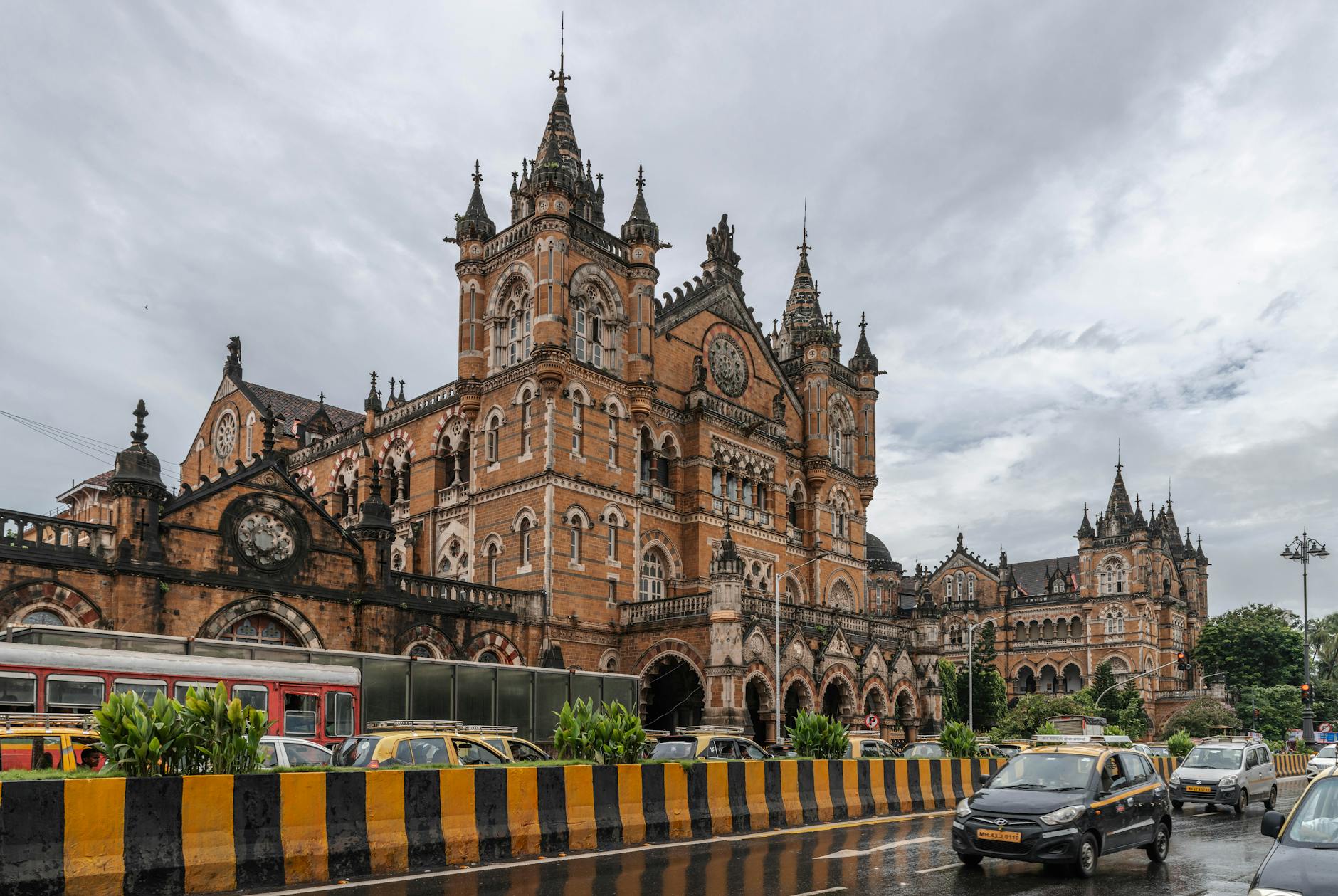
Four nights is the sensible minimum for Mumbai, and five or six if you want the rock-cut sites without rushing. Day one belongs to Fort and Kala Ghoda on foot: the Chhatrapati Shivaji Maharaj Vastu Sangrahalaya, the Asiatic Society steps, David Sassoon Library, then CSMT and the Art Deco frontage along the Oval Maidan and Marine Drive at dusk. Day two is Elephanta — take the 9am launch from the Gateway of India, allow about an hour each way on the water plus the climb up the 120-odd steps, and be back for a late lunch in Colaba. Day three is a northern day: the Kanheri Caves at Borivali East, reached on the Western Line and then a park bus, followed by an evening in Bandra West or Khar.
Add a fourth day for Malabar Hill and Girgaon — Banganga Tank, the Walkeshwar lanes, Girgaon Chowpatty at sunset — or for Dadar's flower market at dawn, Dhobi Ghat at Mahalaxmi and the Mahakali Caves in Andheri East. If you have a fifth and sixth night, spend them out of the city rather than adding another Mumbai day: Lonavala or Karjat for the Karla, Bhaja and Kondana caves, Matheran for the toy train from Neral, or Alibaug across the Atal Setu. Base yourself in Colaba, Fort or Churchgate for the first three nights, because everything on the archaeological list starts from there. Only shift north to Andheri East, Santacruz or Juhu on your last night if you have a flight before 9am.
What hotels actually cost in Mumbai per night
Budget rooms in Mumbai run roughly ₹1,200–₹3,000 a night, which buys a clean air-conditioned double in Andheri East, Vashi, Dadar, Chembur, Thane or Borivali, or a hostel dorm bed in Colaba from about ₹700. Mid-range is ₹4,000–₹9,000 and covers most three- and four-star stock in Fort, Bandra West, Khar, Juhu, Powai and Lower Parel, usually with breakfast and an airport shuttle in the suburban ones. Top-end starts around ₹14,000 and runs to ₹40,000 and beyond for sea-facing rooms on Apollo Bunder, Marine Drive and Worli, with harbour or Arabian Sea views the thing you are actually paying for. Prices are per room, and the difference between an inland and a sea-facing room in the same Colaba hotel can be ₹8,000 a night.
Rates spike in the last two weeks of December, over the Kala Ghoda Arts Festival in February, during Diwali, and around any large event at the Jio World Centre or the NSE conference calendar. The business districts invert the usual pattern: Lower Parel, Worli, Powai, Andheri East and Navi Mumbai (Vashi) are dearest Sunday to Thursday and can fall 30–40% on Friday and Saturday nights, while Colaba, Juhu and Alibaug do the opposite. Monsoon rates from July to September are the year's lowest in the island city, though Lonavala and Matheran charge a premium then for the waterfalls. Booking three to four weeks out is enough for most of the year; make it eight weeks for late December and for February festival dates.
